


The "333 Principle" for small animal anesthesia
author: DOLPHINMED
2025-10-21
The "333 Principle" for small animal anesthesia is the core management protocol during inhalational anesthesia, specifically comprising the following three key points:
Monitoring Management
It is necessary to monitor three physiological parameters in real-time: respiratory rate, heart rhythm, and body temperature. Using equipment such as anesthesia machines, monitors, and thermometers, ensure the small animal maintains smooth breathing, stable heart rate, and normal body temperature range (e.g., using warming devices for small animals to prevent hypothermia) during anesthesia.
Anesthesia Phase Control
The entire process is divided into three stages:
● Induction phase: Rapidly achieve an anesthetized state, avoiding stress responses;
● Maintenance phase: Maintain a stable depth of anesthesia, preventing awakening due to surgical stimulation or excessive depth;
● Recovery phase: Postoperative gradual return to consciousness, observing physiological indicators such as respiratory rate.
● Induction phase: Rapidly achieve an anesthetized state, avoiding stress responses;
● Maintenance phase: Maintain a stable depth of anesthesia, preventing awakening due to surgical stimulation or excessive depth;
● Recovery phase: Postoperative gradual return to consciousness, observing physiological indicators such as respiratory rate.
Risk Factor Assessment
Preoperatively, three categories of risks must be assessed:
● Animal-specific factors (e.g., age, underlying diseases);
● Drug and technical factors (e.g., dosage errors, equipment failure);
● Surgery-related factors (e.g., duration of surgery, sensitivity of the site).
● Animal-specific factors (e.g., age, underlying diseases);
● Drug and technical factors (e.g., dosage errors, equipment failure);
● Surgery-related factors (e.g., duration of surgery, sensitivity of the site).
 Side Effects and Risks of Ventilator Use
  INVITATION TO CMEF 2026 – DOLPHINMED
  Dolphinmed invites you to attend the 93rd China International Medical Device Expo (CMEF)!
  The main features of animal anesthesia machines
  Understanding Inhalational Anesthesia Techniqu
  Understanding the Spontaneous Breathing Mode of Anesthesia Machines
  Classification of Modern Pet Anesthetics
  Anesthesia Workstations and Functional Anatomy Tables
  The Current Situation and Development Trend of Medical Ventilators
  Common Respiratory Modes in Anesthesia and Their Characteristics
  Types and Selection of Small Animal Anesthesia Machines
  Causes and Management of Respiratory Abnormalities During Animal Anesthesia
  THE 92ND CMEF HAS CONCLUDED, DOLPHINMED ACHIEVING SIGNIFICANT SUCCESS
  Function of Ventilators
  Functions and Structure of an Anesthesia Machine
  Selection of commonly used drugs for animal anesthesia
  Difference between anesthesia machine and ventilator
  Dolphinmed has made a major breakthrough in the field of veterinary respiration
 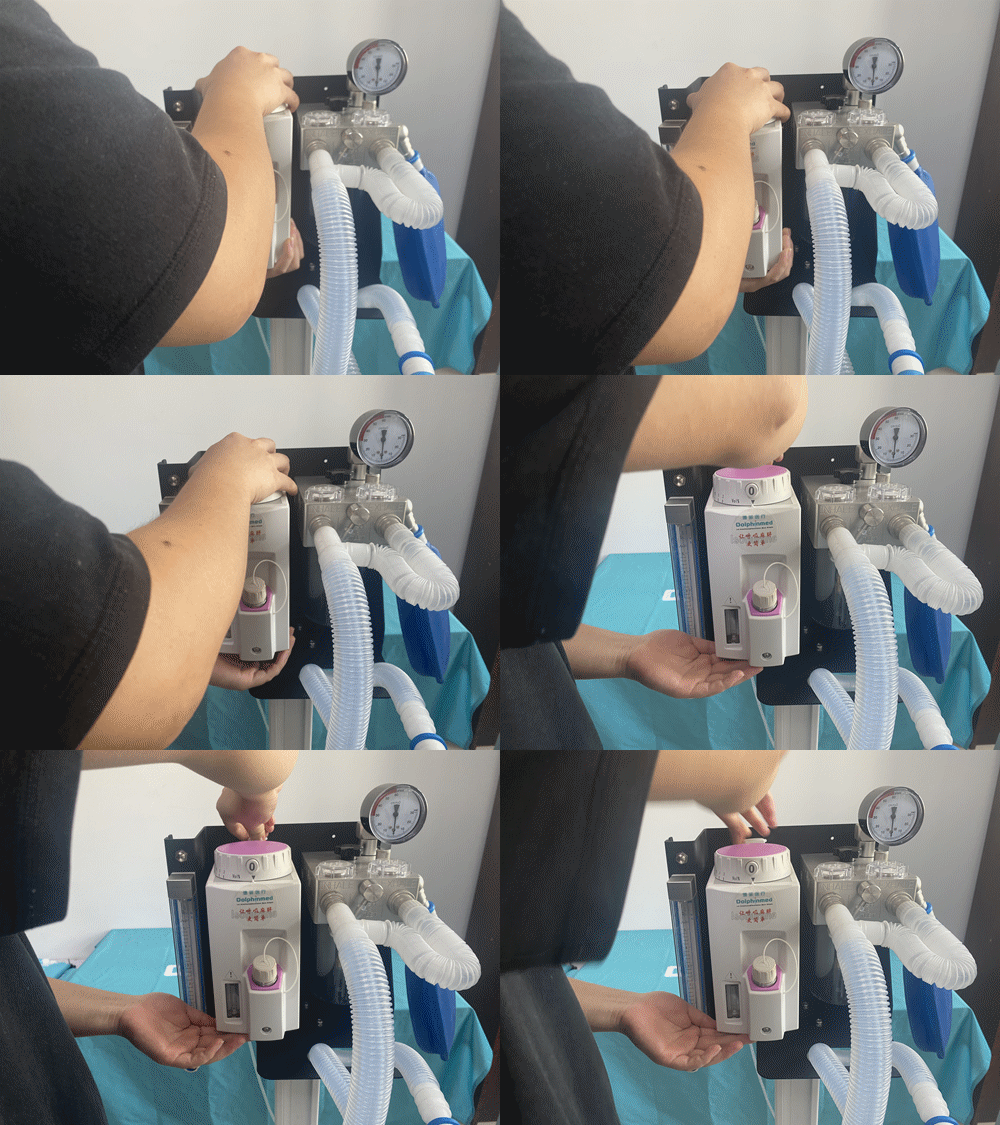 Introduction of anesthesia vaporizer
 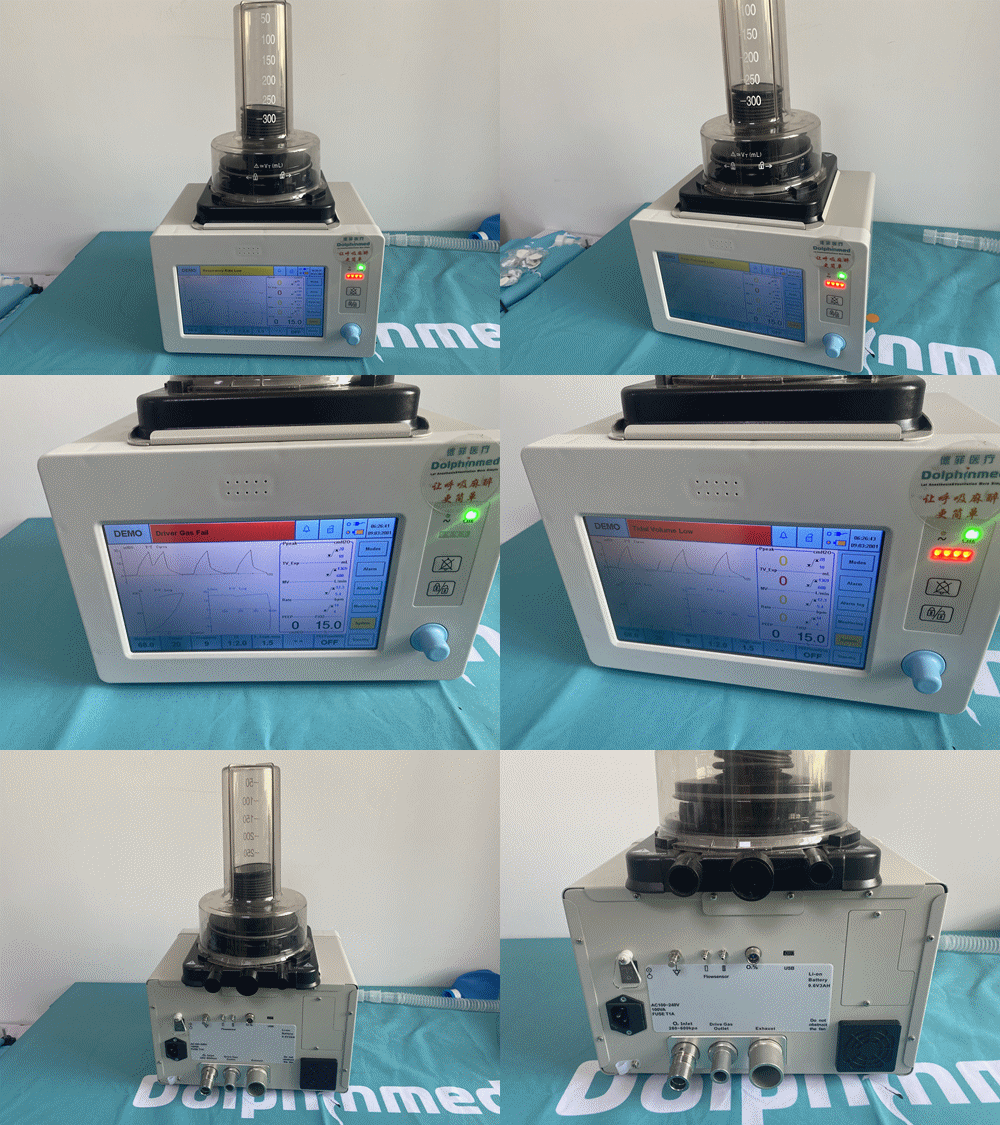 Part of veterinary anesthesia ventilator